30 November 2009

On Pilgrimage

I suppose you've noticed things are a bit different on the blog here.  The changes are, in case you haven't guessed, meant to reflect my "pilgrim" status over the next three months.  I hope you'll be back to visit soon, as I'll be making regular journal entries along with some thoughtful and well-crafted photos meant to emphasize quality and not quantity.  Six other seminarians will also be posting journal entries and photos on the Official Seminary Journal, the link to which can be found above ("The Seminarian's Tale").  We're leaving on Wednesday, so good stuff will soon be forthcoming!

Ж


In the meanwhile, to tide you over until our first entry, I thought I'd share a little piece of artwork recently commissioned for a priest friend of ours. It's a bookplate, designed to be pasted into the inside front cover of a book, and identifies the owner in a distinctive way.  These were all the rage back in the day, but as we hold our books cheap these days, this sort of investment hasn't caught on.


However, the fellow in question is quite the learned man, and is an earnest lender of books.  What better gift than a bookplate?  So we thought, and indeed it turned out better than I'd hoped.  The very talented Matthew Alderman, a recent graduate of Notre Dame architecture, designed a custom drawing that we had printed using offset lithography (the same process used to print books).

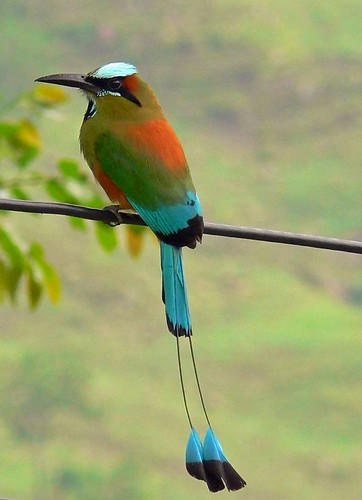
The drawing is of Bishop Frederic Baraga, the first bishop of our friend's diocese.  He was known as the "snowshoe priest" during his years of working with the trappers and natives, slogging from village to village with a seemingly indefatigable fervor.  In his right hand, he holds a book entitled "Kije-Manito o Masinaigan," which if you knew Chippewa, you'd be able to translate as "The Holy Book of God," i.e. the Bible; you see, Baraga wrote the first grammar of the Chippewa language (which, interestingly enough, I was able to use to look up the Chippewa word for Bible... thanks GoogleBooks!).  The fleur-de-lis in the moon symbolizes the Mother of God, to whom Baraga had dedicated the very first church he christened in the territory, according to a vow he'd made years before.  The lily is also a common symbol of purity, and has been used in iconography for St. Aloysius Gonzaga, patron saint of youth as well as of the small Salvadoran village in which our friend served for three years before entering the seminary.  The national bird of El Salvador, the torogóz, is reclining at the foot of the left stave, and a small hare is poking its head up above the roof (the Salvadoran nickname for the man was "el conejo").

But the finest detail is hidden to the untutored eye.  This newly ordained priest had done a pilgrimage following in the footsteps of the saintly bishop, tracing a path from the first Mass offered in the mission to his tomb in the diocesan cathedral.  You'll notice in the snow behind Baraga are footprints leading to the treeline.  It might be hard to see, but there's a silhouette of a man standing in an opening in the trees, heading out to "follow in the footsteps" of the founding bishop of his diocese.  All in all, a rich symbolic icon of the man we know, and hopefully an encouragement to hold fast to his priestly calling and pursue excellence through the intercession of his shepherd's predecessor!

23 November 2009

Thoughts on Literature, Catholic and Otherwise

Recently, a discussion among alumni of my undergraduate institution prompted some thoughts about how Catholic literature has affected us and our maturation in the faith.  The following are my comments as they were sent out to the group.

Ж

As to how Catholic writing has influenced me, my instinct is to approach it from my current situation as a seminarian immersed in theological study.  While on vacation—as I am now—my impulse is to set aside the often speculative and abstract world of theology in favor of the particular and concrete.  My leisure time is characterized by an immersion in narrative.  While on some level I see this as "recreation," in the sense that it recharges me to return to my studies with renewed enthusiasm, there is a fundamentally more important reason that I am drawn to fiction (especially the kind of epic fiction that takes up a person's story from life till death): it is an enfleshment of the beauty, goodness, and truth that is presented through academic study. 

21 November 2009

Nothing To See Here

Human beings are weird.

Last night I was walking back to the parking garage after a huge gathering for Catholic youth at the Sprint Center in downtown KC, MO.  18,000 high school students packed into a dome right in the middle of the up-and-coming, revitalized downtown, with another several thousand connected through video link over at the convention center down the street.  They were caught up in a frenzy of light shows, music, dance-skits, and a pretty stirring talk on chastity by Jason Evert and his wife.  There were some pretty good points made about Christian virtue, modesty, and the hypersexualization of our culture, in such a way that they really did get across.

That made the recent article in the NYT on the androgynous trends in clothing all the more interesting.  The most interesting comment being:

As if in this world one could EVER find a place in which to render oneself sexually neutral.  There was a time when dressing as a child might have done that; now, it's a fixture of the porn industry that the women are to appear as young as possible.  Few would argue that the line between "adult entertainment" and "abuse" is clear anymore. 
Mingling men’s and women’s clothing, others argue, is like waving a flag of neutrality. “It’s a way of breaking down sexualized relationships, of getting people to relax,” said Piper Marshall, 24, who is an assistant art curator at the Swiss Institute in Manhattan. “I work with lots of male artists,” she added. “It’s important to find a common ground.”

The question becomes, when sex is everywhere, where do we go to hide?

11 November 2009

Shucks, that Shore is Purty

He'd ride sometimes clear to the upper end of the laguna before the horse would even stop trembling and he spoke constantly to it in spanish in phrases almost biblical repeating again and again the strictures of a yet untabled law.  Soy comandante de las yeguas, he would say, soy y yo sólo.  Sin la caridad de estas manos no tengas nada.  Ni comida ni agua ni hijos.  Soy yo que traigo las yeguas de las montañas, las yeguas jóvenes, las yeguas salvajes y ardientes.  While inside the vaulting of the ribs between his knees the darkly meated heart pumped of who's will and the blood pulsed and the bowels shifted in their massive blue convolutions of who's will and the stout thighbones and the knee and cannon and the tendons like flaxen hawsers that drew and flexed and drew and flexed at their articulations and of who's will all sheathed and muffled in the flesh and the hooves that stove wells in the morning groundmist and the head turning side to side and the great slavering keyboard of his teeth and the hot globes of his eyes where the world burned.

From Cormac McCarthy's All the Pretty Horses

01 November 2009

New Avenues of Creativity


In preparation for our class pilgrimage to the Holy Land, I'm starting up a photojournal in the hopes of offering a daily image of some of the people and places we're privileged to visit during our 10 weeks there.  In years past, most of the offerings have been a chronicle of "first-we-went-here-and-saw-this-then-we-went-somewhere-else-and-saw-some-other-cool-holy-stuff," so it's my hope to offer more of a creative window into the places we visit and our experience of them.  Of course, the more I get to know my classmates, the more fascinated with their stories I've become, so you can expect to see some portraiture as well.

One image per day with a short entry, reflection, or commentary to accompany it seems the best way to accomplish my goal.  The images I've already posted on the photoblog aren't exactly stunning, but part of this is meant to be a discipline and apprenticeship into the photographic craft.  To this end, your comments, suggestions, and feedback would be much appreciated.  As was noted in the recent Brothers Bloom:

 A photograph is a secret of a secret.  The more it shows, the less you know.

I'll continue cross-posting on this blog for those of you that are following it, but feel free to bookmark the photoblog directly.  You can find it at the link below.


30 October 2009

We Want To Be Swarms

Image Journal runs a good article every once in a while.  Their latest, a short look at Rene Girard, is stupendous.

Contrary to the going rhetoric of the day, we don’t really want to be individuals. We want to be swarms.

10 October 2009

At Last, The Cavalry

Senator Jim DeMint, member of the Senate Foreign Relations Committee, has traveled down to Honduras and seen through the fog of propaganda and outright lies that have cast the "de facto" government of that country as just one more regime of rabid, power-hungry usurpers and thugs in the long tradition of Central American fascists (New York Times). Besides the 400 or so Venezuelans imported in by Chavez to agitate in favor of restoring his stooge, it appears as if the Senator encountered only one person who actually supports the treasonous ex-president:

Obama's ambassador to Honduras, Hugo Llorens.

This is, of course, in direct opposition to the legal investigation conducted by a senior legal analyst of the Library of Congress in August--AUGUST, as in two MONTHS ago--which concluded that what has taken place there is absolutely, completely, undeniably 100% legal.

Senator DeMint's article is worth reading, and thanks be to God that somebody in the U.S. government has gotten to the bottom of this insanity. Here's hoping that something reasonable will be done to put the world's unreasonable treatment of this loyal ally of ours to an end.

09 October 2009

Greatest Show on Earth

It's nice to see at least some finer distinctions being made in the popular culture (even as they're crafted in response to the precisionless rhetoric of that same culture). A great example of this is the review of Richard Dawkins' new book, written as a magnum opus of evolutionary argument, over at the Grey Lady:

Dawkins is aware that evolution is commonly called a theory but deems “theory” too wishy-washy a term because it connotes the idea of hypothesis. Evolution, in Dawkins’s view, is a concept as bulletproof as a mathematical theorem, even though it can’t be proved by rigorous logical proofs. He seems to have little appreciation for the cognitive structure of science. Philosophers of science, who are the arbiters of such issues, say science consists largely of facts, laws and theories. The facts are the facts, the laws summarize the regularities in the facts, and the theories explain the laws. Evolution can fall into only one of these categories, and it’s a theory.

Read the rest here.

27 September 2009

Fake Media Picking Up The Slack

So I'm just now catching on to this ACORN scandal, but I don't watch the news much anyway-- that I'm not up on the latest horror is no surprise. Apparently the mainstream news channels aren't exactly jumping on this. Jon Stewart (along with the rest of the world) seems to be a little frustrated:

(Head's up, PG-13)

The Daily Show With Jon StewartMon - Thurs 11p / 10c
The Audacity of Hos
www.thedailyshow.com
Daily Show
Full Episodes
Political HumorHealthcare Protests

I do have a little more respect for Jon Stewart, now. But what's with the people in the studio? They aren't laughing at any of the jokes. Makes you wonder who goes to these things.

After my summer in El Salvador listening to news outlets spreading all manner of ridiculous slander about the nonexistent "coup" in Honduras and serving as little more than a propaganda outlet for ChavezWorld, there's no question in my mind that we are not up against incompetence here ... it's a premeditated, direct assault on the truth.

All in the name of doing the right thing, of course.

19 September 2009

NPH Short

During my summer at NPH, I often asked myself if I was putting undue pressure on the kids by carrying my camera around. Other than the fact that they consistently bombarded me with requests for a photo, and then a viewing of the photo, and then another shot to fix what they didn't like about the first one, I did wonder if the camera was serving more as a barrier than a window.

Then, one afternoon, I just turned it on. And this is what I got.


17 September 2009

Excerpts From the Diary of an Orphan in Training - Part Three

Three weeks after returning to the States, the process of sifting and sorting my experiences has gotten fully under way. Between tackling the organization of teen weeks’ worth of photos and video footage I’d accumulated, reuniting with friends who have lived at and understood NPH El Salvador, and the almost agonizing solitude of a 5-day silent retreat, those kids have been almost constantly on my mind. The frustration of being so far away was worst when reviewing the videos I’d taken of Carmen, the little girl I’d decided to sponsor; I’d never, ever grown so attached to a baby as I did to her. A number of times I simply had to stop watching, so intense was the desire to simply be there as she struggled to stand up or walk. They tell me that she’s already running about Casa Niño Jesús on her own; my insides twisted up when I thought of how much she’ll have grown by the next time I see her, and each day how much I am missing. I felt like a father poring over the few mementos of his young family he had to console himself in his time away.

As a Catholic seminarian contemplating a life of celibate commitment, such sentiments may seem out of place, but a summer spent with this gran familia could not have done more for me to put in perspective the meaning of spiritual fatherhood. In spite of the limited time commitment I was able to make, I sensed an interior freedom to commit emotional energy to the pequeños in a way that lined up with the sorts of exterior commitments I was (and am) preparing to make. Their eagerness and receptivity to the meager affection I had to share depleted my reserves even as they drew forth more and more in ways that, upon reflection, surprise me.

Yet I experienced another dimension of this relationship through the receptivity that was, in a real sense, forced upon me by the inability to communicate fluently. The outlets through which I’d presumed I’d be able to “give” were depleted rather quickly; it wasn’t long before I sensed that I didn’t have much to offer to this flourishing little community. With time, it was almost as if by allowing them to take a genuine interest in me—and demonstrating to them that I appreciated that interest—that something in them was satisfied.

The clearest case of this was a young man, only 14, who arrived at NPH with his three younger siblings not too long after I did. He entertained the other children in the clinic by roughing up his younger brothers, who were almost as big as he was, with preposterous wrestling moves and holds, flying leaps and whatever the Salvadoran equivalent to “cry uncle!” would have been. Throughout the summer, we’d cross paths often, and it was always a project to keep up with his rapid and slangy Spanish. One evening in the clinic, we got a little wild (I think the nursing staff was always too polite to chew me out for winding the kids up right before bed) and he fell on his rear after I boosted him up into the air for the last big jump of the night (“seriously, now, this is the last one”). More out of embarrassment than pain, he crawled under the bed like a whipped animal and refused to come out. For a long time after that, I found it hard to believe he was as old as he said he was.

The last day I had to spend in the clinic was the Sunday before I left. I spent the whole afternoon playing with the kids and letting them run around and take pictures with my camera. My young friend was there again with a broken arm—he had a knack for having too much fun. While I was off in another corner of the room, he got one of the others to hold the camera and recorded a short goodbye message to me. I curse the microphone on that camera that picked up every single decibel of background noise while muddling his already rapid words into a slurry of vowels, but in a way, everything that needed to be communicated was present on his face. In his short adios I saw the man within the boy—direct, earnest, and self-confident enough to communicate his affection and gratitude without embarrassment or awkwardness. It is an ironic gift that the most lively token of my friendship with a young man I habitually regarded as a child is a 25-second glimpse of the man who, with the help of NPH, he is one day to become.

Father Wasson was known to have said, “The most important thing is that my children practice charity, because if they love, they will be loved.” Strange as it may seem to say it, my only boast is that I was a recipient of the love of these young men, women, and children—and that by God’s gift, they were better for it. What a strange, wonderful, storybook place this is, where the famous paradox of St. Francis stands on its head: it is in receiving that we give.